

9 Certified Humane® standards for pig welfare and responsible farming
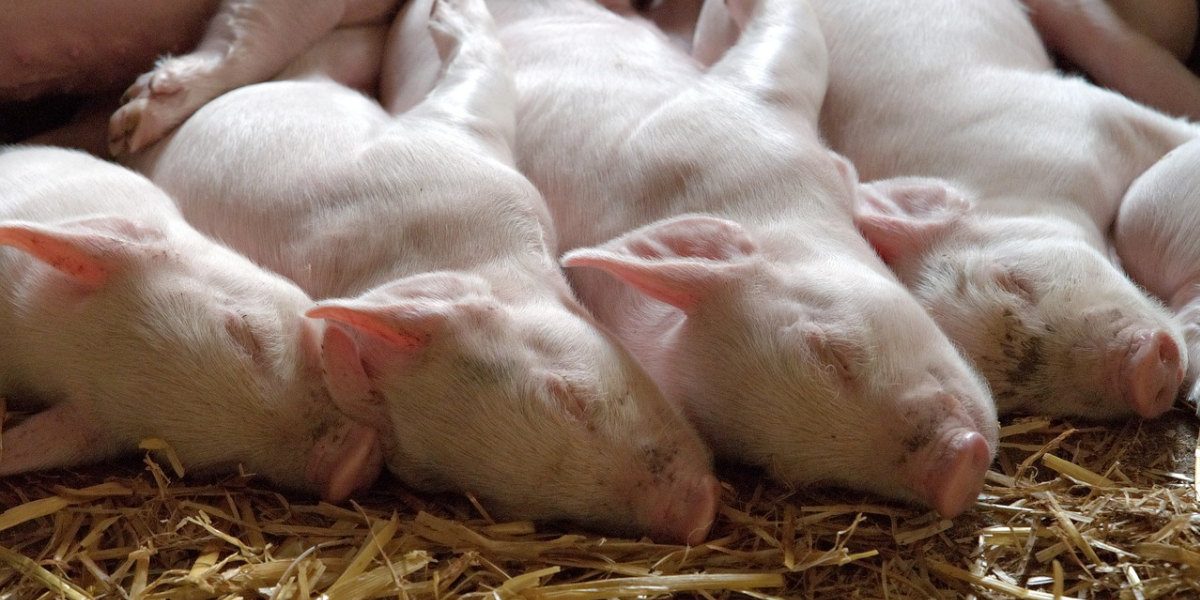
Pig welfare standards require producers to provide conditions that meet pigs’ specific needs and allow them to express natural behaviors.
Animal welfare certification requires producers to follow clear guidelines related to nutrition, water availability, housing conditions, environmental management, and animal handling.
These requirements are part of the Certified Humane® standards and help ensure that pigs are raised according to practices designed to support their health, comfort, and overall well-being. In this article, we present 9 key practices required to support pig welfare in certified production systems.
1. Nutrition: healthy and adequate feed
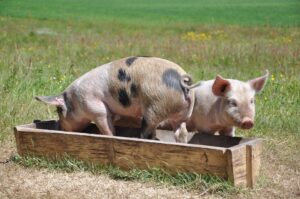 Pigs must receive a balanced diet that provides the nutrients required for their development and different stages of production.
The nutritional needs of piglets, breeding sows, and growing pigs vary, and feed management must consider each animal’s age, weight, and physiological condition.
Beyond providing adequate feed, producers must ensure that food is accessible to all animals. Competition for feed should be minimized, as it can lead to aggression, fights, and injuries. Sows must also be protected from aggression by dominant animals within the group.
Feed may be provided through troughs that allow all pigs to eat at the same time. A space equivalent to 1.1 times the width of the animal’s shoulders is considered sufficient. Producers must ensure that feeders remain clean and functional. Certified Humane® standards require these systems to be checked twice daily.
Feed may also be provided directly on the floor, as long as the area is clean and free from contaminants.
2. Water: clean, fresh, and readily available
Pigs must have daily access to clean and fresh drinking water.
Drinkers must be properly positioned and adjusted to ensure that all animals can drink comfortably. Regular maintenance of water systems is essential to guarantee proper flow and availability.
Lactating sows require continuous access to clean water. Producers must also maintain emergency water supplies to ensure availability for at least 24 hours in case of unexpected issues, such as drought or contamination of the water source.
3. Facilities: safe environments that prevent injuries
Housing facilities must be designed to protect pigs from injuries.
Pens should not contain sharp edges, protrusions, or other structures that could harm animals. Electrical systems must be properly insulated, secured, protected from rodents, and regularly inspected.
The materials used on interior surfaces must be easy to clean and disinfect, helping reduce disease risks and maintain suitable conditions for animal well-being.
4. Environment: neither too cold nor too hot
Environmental conditions must protect pigs from extreme temperatures.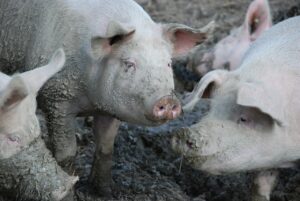
Acceptable temperature ranges vary according to animal weight and production stage. For pigs weighing more than 70 kg, for example, temperatures should remain between 10°C and 25°C.
During warmer periods, producers should adopt measures to prevent heat stress, such as providing cooling areas, mud wallows, natural or artificial shade, fans, sprinklers, drip systems, and misting systems.
5. Air quality: clean and properly ventilated
Proper ventilation is essential to maintain air quality and prevent excessive humidity, as pigs are susceptible to respiratory diseases.
Certified Humane® standards establish limits for ammonia concentration. Levels must remain below 10 ppm and should never exceed 25 ppm. Monitoring and recording of ammonia levels must be carried out regularly, at least once every two weeks.
6. Space: enough room to move freely
Providing enough space is essential for pig welfare, allowing animals to move, rest, and express natural behaviors.
The available space must be at least 1.5 times the area occupied by the animal when lying down. Specific requirements apply to growing pigs and breeding sows.
Confinement and restraint are restricted and may only be used in specific situations, such as veterinary procedures, routine examinations, or facility cleaning.
Producers should also minimize regrouping whenever possible, as changes in social groups can increase stress and aggression.
Environmental enrichment is an important part of pig welfare. Materials such as straw, wood shavings, or sawdust allow pigs to explore, root, and chew, supporting their natural behaviors.
7. Resting area: dry and comfortable
Pigs must have access to resting areas that are dry, comfortable, and large enough for all animals to lie down.
In indoor production systems, resting areas must have suitable flooring and drainage to prevent excessive moisture.
Outdoor systems require additional measures, including access to sheltered areas that protect animals from extreme weather conditions.
8. Farrowing: comfort for sows and piglets
Farrowing is one of the most important stages in pig production, as it involves both the welfare of the sow and the protection of newborn piglets.
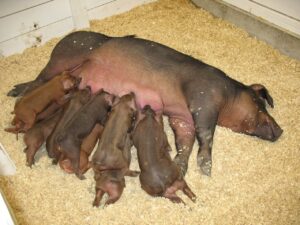 Farrowing crates, which restrict the sow’s movement and limit interaction with piglets, are not permitted under Certified Humane® standards.
Sows must be housed in systems that allow greater freedom of movement and provide access to appropriate materials, such as straw, that support natural behaviors.
Before farrowing, sows must be provided with clean and comfortable conditions. They must remain in the farrowing area for at least 28 days after piglet birth, and farrowing pens must meet minimum space requirements of 1.8 m x 2.4 m.
9. Handling: calm and respectful management
Good pig welfare practices require animals to be handled calmly and carefully.
All employees involved in animal handling must receive appropriate training to understand pig behavior and reduce fear and stress during human interaction.
The goal is to ensure that pigs become accustomed to human contact and experience less stress when interacting with farm workers.
During preparation for transport, pigs must have access to water. A fasting period may be recommended to reduce discomfort during transportation, lasting at least four hours and no more than 18 hours before slaughter.
These practices represent only a summary of the broader Certified Humane® standards for pig production. Explore the complete standards and learn more about the practices that support better animal welfare in pig farming.
Published on August 26, 2026