
Logo Logo Logo Logo Logo
  • Certified Companies in Asia
  • LOCAL LANGUAGES
    • Indonesia
    • Japan
    • Thailand
    • Vietnam
  • BLOG
    • English
    • Bahasa Indonesia
    • Tiếng Việt
    • ไทย
    • 日本語
  • Contact Us
  • Main HFAC Website
  • Certified Companies in Asia
  • LOCAL LANGUAGES
    • Indonesia
    • Japan
    • Thailand
    • Vietnam
  • BLOG
    • English
    • Bahasa Indonesia
    • Tiếng Việt
    • ไทย
    • 日本語
  • Contact Us
  • Main HFAC Website

9 Certified Humane® standards for pig welfare and responsible farming
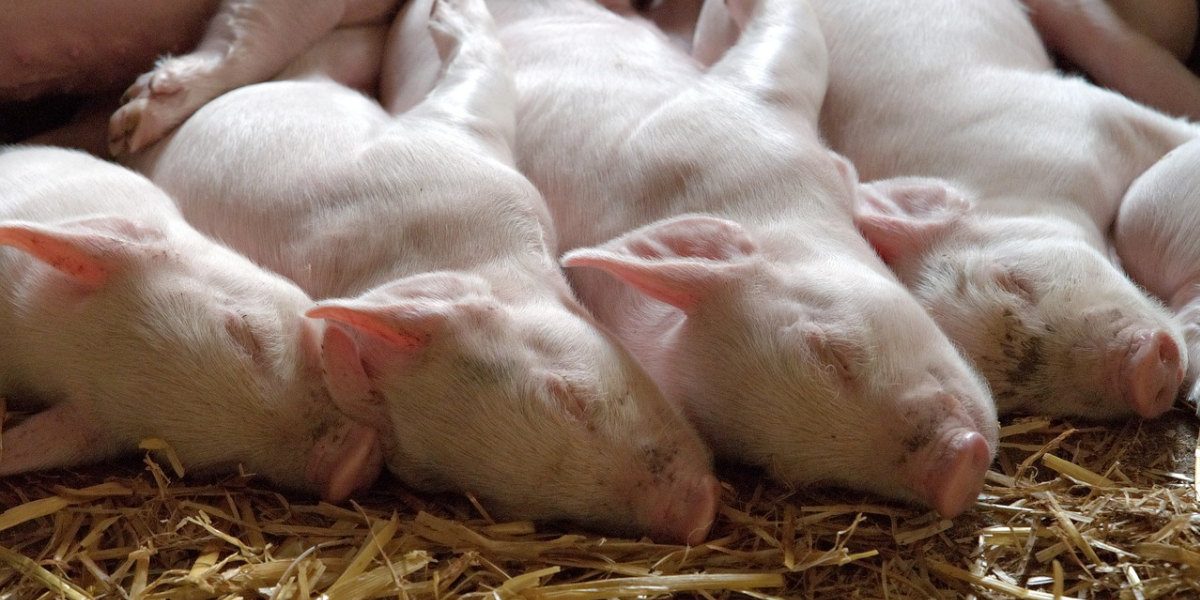
Pig welfare standards require producers to provide conditions that meet pigs’ specific needs and allow them to express natural behaviors.

Animal welfare certification requires producers to follow clear guidelines related to nutrition, water availability, housing conditions, environmental management, and animal handling.

These requirements are part of the Certified Humane® standards and help ensure that pigs are raised according to practices designed to support their health, comfort, and overall well-being. In this article, we present 9 key practices required to support pig welfare in certified production systems.

1. Nutrition: healthy and adequate feed
Pigs must receive a balanced diet that provides the nutrients required for their development and different stages of production.

The nutritional needs of piglets, breeding sows, and growing pigs vary, and feed management must consider each animal’s age, weight, and physiological condition.

Beyond providing adequate feed, producers must ensure that food is accessible to all animals. Competition for feed should be minimized, as it can lead to aggression, fights, and injuries. Sows must also be protected from aggression by dominant animals within the group.

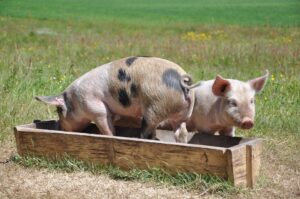
Feed may be provided through troughs that allow all pigs to eat at the same time. A space equivalent to 1.1 times the width of the animal’s shoulders is considered sufficient. Producers must ensure that feeders remain clean and functional. Certified Humane® standards require these systems to be checked twice daily.

Feed may also be provided directly on the floor, as long as the area is clean and free from contaminants.

2. Water: clean, fresh, and readily available

Pigs must have daily access to clean and fresh drinking water.

Drinkers must be properly positioned and adjusted to ensure that all animals can drink comfortably. Regular maintenance of water systems is essential to guarantee proper flow and availability.

Lactating sows require continuous access to clean water. Producers must also maintain emergency water supplies to ensure availability for at least 24 hours in case of unexpected issues, such as drought or contamination of the water source.

3. Facilities: safe environments that prevent injuries

Housing facilities must be designed to protect pigs from injuries.

Pens should not contain sharp edges, protrusions, or other structures that could harm animals. Electrical systems must be properly insulated, secured, protected from rodents, and regularly inspected.

The materials used on interior surfaces must be easy to clean and disinfect, helping reduce disease risks and maintain suitable conditions for animal well-being.

4. Environment: neither too cold nor too hot

Environmental conditions must protect pigs from extreme temperatures.
Acceptable temperature ranges vary according to animal weight and production stage. For pigs weighing more than 70 kg, for example, temperatures should remain between 10°C and 25°C.

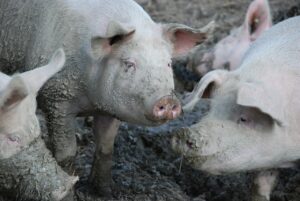
During warmer periods, producers should adopt measures to prevent heat stress, such as providing cooling areas, mud wallows, natural or artificial shade, fans, sprinklers, drip systems, and misting systems.

5. Air quality: clean and properly ventilated

Proper ventilation is essential to maintain air quality and prevent excessive humidity, as pigs are susceptible to respiratory diseases.

Certified Humane® standards establish limits for ammonia concentration. Levels must remain below 10 ppm and should never exceed 25 ppm. Monitoring and recording of ammonia levels must be carried out regularly, at least once every two weeks.

6. Space: enough room to move freely

Providing enough space is essential for pig welfare, allowing animals to move, rest, and express natural behaviors.

The available space must be at least 1.5 times the area occupied by the animal when lying down. Specific requirements apply to growing pigs and breeding sows.

Confinement and restraint are restricted and may only be used in specific situations, such as veterinary procedures, routine examinations, or facility cleaning.

Producers should also minimize regrouping whenever possible, as changes in social groups can increase stress and aggression.

Environmental enrichment is an important part of pig welfare. Materials such as straw, wood shavings, or sawdust allow pigs to explore, root, and chew, supporting their natural behaviors.

7. Resting area: dry and comfortable

Pigs must have access to resting areas that are dry, comfortable, and large enough for all animals to lie down.

In indoor production systems, resting areas must have suitable flooring and drainage to prevent excessive moisture.

Outdoor systems require additional measures, including access to sheltered areas that protect animals from extreme weather conditions.

8. Farrowing: comfort for sows and piglets

Farrowing is one of the most important stages in pig production, as it involves both the welfare of the sow and the protection of newborn piglets.
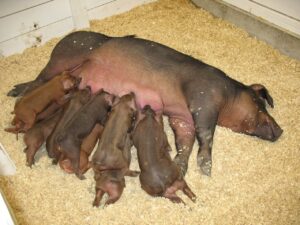
Farrowing crates, which restrict the sow’s movement and limit interaction with piglets, are not permitted under Certified Humane® standards.

Sows must be housed in systems that allow greater freedom of movement and provide access to appropriate materials, such as straw, that support natural behaviors.

Before farrowing, sows must be provided with clean and comfortable conditions. They must remain in the farrowing area for at least 28 days after piglet birth, and farrowing pens must meet minimum space requirements of 1.8 m x 2.4 m.

9. Handling: calm and respectful management

Good pig welfare practices require animals to be handled calmly and carefully.

All employees involved in animal handling must receive appropriate training to understand pig behavior and reduce fear and stress during human interaction.

The goal is to ensure that pigs become accustomed to human contact and experience less stress when interacting with farm workers.

During preparation for transport, pigs must have access to water. A fasting period may be recommended to reduce discomfort during transportation, lasting at least four hours and no more than 18 hours before slaughter.

These practices represent only a summary of the broader Certified Humane® standards for pig production. Explore the complete standards and learn more about the practices that support better animal welfare in pig farming.

Published on August 26, 2026

Categories:
Transportation & Slaughter
Tags:
animal care, Animal welfare standards, Certified Humane, Humane farming, livestock welfare, Pig farming, Pig welfare, Pork production, responsible agriculture


Search
Blog Categories
  • Certification
  • Content by language
    • Bahasa Indonesia
    • Tiếng Việt
    • ไทย
    • 日本語
  • Content by species
    • Atlantic Salmon
    • Beef Cattle
    • Bison
    • Chickens
    • Dairy Cattle
    • Goat
    • Laying Hen
    • Pig
    • Sheep
    • Turkey
  • Market
  • Producer
  • Technical
  • Transportation & Slaughter
  • World


Links
  • Contact Us
  • Blog
  • Certified Companies in Asia
  • Certification Inquiry
  • Privacy Policy
  • Main HFAC website
Cookie Settings
FOLLOW US ON SOCIAL MEDIA
Certified Humane® Asia's Logo
Certified Humane® Asia
Visit Our Pages by Asian Languages

ACCESS OUR MAIN WEBSITE
 Certified Humane Raised & Handled
certifiedhumane.org
Receive the latest news about animal welfare

Copyright 2024 – 2026 Certified Humane Institute in Asia. | Website by Infomídia.

Certified Humane® Asia | Animal Welfare
Legal Notice
This site uses cookies to personalize your experience. You can find out which cookies we use and disable them. By clicking 'I Accept,' you authorize the use of cookies.
Cookie SettingsI ACCEPT
Manage consent

General Information on Privacy and Cookies

Cookies are used to allow the site to provide basic functionality, improve performance, and enhance a personalized experience. Learn more: Privacy Policy

 
Necessary
Always Enabled
Necessary cookies are essential for the website to function properly. These cookies ensure basic functionalities and security features of the site in an anonymous manner.
CookieDurationDescription
__cfduid1 monthThe cookie is used by CDN services like CloudFlare to identify individual clients behind a shared IP address and apply security settings on a per-client basis. It does not correspond to any user ID in the web application and does not store any personally identifiable information.
cookielawinfo-checbox-analytics11 monthsThis cookie is set by the cookie management system - GDPR Cookie Consent. It is used to store the user's consent for cookies in the "Analytics" category.
cookielawinfo-checbox-functional11 monthsThis cookie is set by the cookie management system - GDPR Cookie Consent. It is used to store the user's consent for cookies in the "Functional" category.
cookielawinfo-checbox-others11 monthsThis cookie is set by the cookie management system - GDPR Cookie Consent. It is used to store the user's consent for cookies in the "Others" category.
cookielawinfo-checkbox-advertisement1 yearThis cookie is set by the cookie management system - GDPR Cookie Consent. It is used to store the user's consent for cookies in the "Advertising" category.
cookielawinfo-checkbox-analytics11 monthsThis cookie is set by the cookie management system - GDPR Cookie Consent. It is used to store the user's consent for cookies in the "Analytics" category.
cookielawinfo-checkbox-necessary11 monthsThis cookie is set by the cookie management system - GDPR Cookie Consent. It is used to store the user's consent for cookies in the "Necessary" category.
cookielawinfo-checkbox-performance11 monthsThis cookie is set by the cookie management system - GDPR Cookie Consent. It is used to store the user's consent for cookies in the "Performance" category.
viewed_cookie_policy11 monthsThis cookie is set by the cookie management system - GDPR Cookie Consent. It is used to store whether or not the user has given their consent for the use of cookies. It does not store any personal data.
Others
Other cookies are those that have not yet been categorized and are still being analyzed, without being classified into any specific category.
CookieDurationDescription
_rdlps_pp6 monthsRD Station cookie used to prevent the same visitor from having to answer the same questions in a smart form.
From 1 day to 3 monthsRD Station Marketing cookie used to prevent the same popup from being shown to the same visitor repeatedly within a short period of time.
AppKey12 hours and 28 minutesA unique UUID value assigned by Where2GetIt to a specific locator; one of two ways to ensure that only the authorized client loads and uses the page and resources.
Authsite12 hours and 28 minutesURL that was authorized to use this locator; the second part of Where2GetIt's security to ensure that only the authorized client uses the page and resources.
cookieconsent_status_1 yearRD Station Marketing cookie used to save cookie preference responses, so that the same question is not asked again during the validity of this consent..
W2GISM12 hours and 28 minutes
A session cookie used by Where2GetIt to store cached values. It allows us to ensure that requests come from the authorized page to access the data (appkey), requests for the correct account (authsite), and to track the number of users/visitors in the session (W2GISM).
yt-remote-connected-devicesneverThis HTML storage key is used to regulate the behavior of the embedded YouTube video player.
yt-remote-device-idneverIt stores the user's preferences regarding the video player used by the embedded YouTube video.
Analytics
Analytical cookies are used to understand how visitors interact with the site. These cookies help provide information on metrics such as the number of visitors, bounce rate, traffic source, etc.
CookieDurationDescription
__rd_experiment_version1 yearRD Station Marketing cookie used to ensure that a user always sees the same version of the A/B test and guarantees consistency of results and experience.
__trf.src2 yearsRD Station cookie used to store the source reference of a user's visit to your website.
_ga2 yearsGoogle Analytics installs this cookie. It is used to calculate visitors, sessions, campaign data, and to track site usage for the Analytics report. The cookies store information anonymously and assign a randomly generated number to identify unique visitors.
_gat1 minuteGoogle Universal Analytics installs these cookies to control the request rate and limit data collection on high-traffic sites.
_gid1 dayThis cookie is installed by Google Analytics. It is used to store information about how visitors use a website and helps create an analytical report on website performance. The data collected includes the number of visitors, the source from which they came, and the pages visited anonymously.
_rdtrk9 years 9 monthsRD Station cookie used to store the list of all the pages a visitor has accessed within its domain.
CONSENT16 years 5 months 15 days 1 hour 28 minutesYouTube sets these cookies, which are used to track views of embedded videos.
rdtrk9 years 9 monthsRD Station cookie used to store the list of all the pages a visitor has accessed within its domain.
Advertising
Advertising cookies are used to deliver relevant ads and marketing campaigns to visitors. These cookies track visitors across websites and collect information to provide personalized advertisements.
CookieDurationDescription
_fbp3 monthsThis cookie is set by Facebook to deliver advertisements when users are on Facebook or a digital platform powered by Facebook advertising after visiting this website.
fr3 monthsThis cookie is set by Facebook to display relevant ads to users and to measure and improve ads. The cookie also tracks user behavior across the web on sites that have the Facebook pixel or social plugin.
IDE1 year and 24 daysUsed by Google DoubleClick, it stores information about how the user uses the website and any other advertisements before visiting the site. This is used to show users ads that are relevant to them based on their user profile.
NID6 monthsThis cookie is used to create a profile based on the user's interests and display personalized ads.
test_cookie15 minutesThis cookie is set by doubleclick.net. The purpose of the cookie is to determine if the user's browser supports cookies.
VISITOR_INFO1_LIVE5 months and 27 daysThis cookie is set by YouTube. It is used to track information about embedded YouTube videos on a website.
YSCsessionYouTube sets these cookies, which are used to track views of embedded videos.
Performance
Performance cookies are used to understand and analyze the main performance indicators of the site, which helps provide visitors with a better user experience.
CookieDurationDescription
_form_fields3 monthsCookie from RD Station used to quickly fill in fields previously completed.
SAVE & ACCEPT
Powered by CookieYes Logo