

Tips for Raising Cage-Free Laying Hens
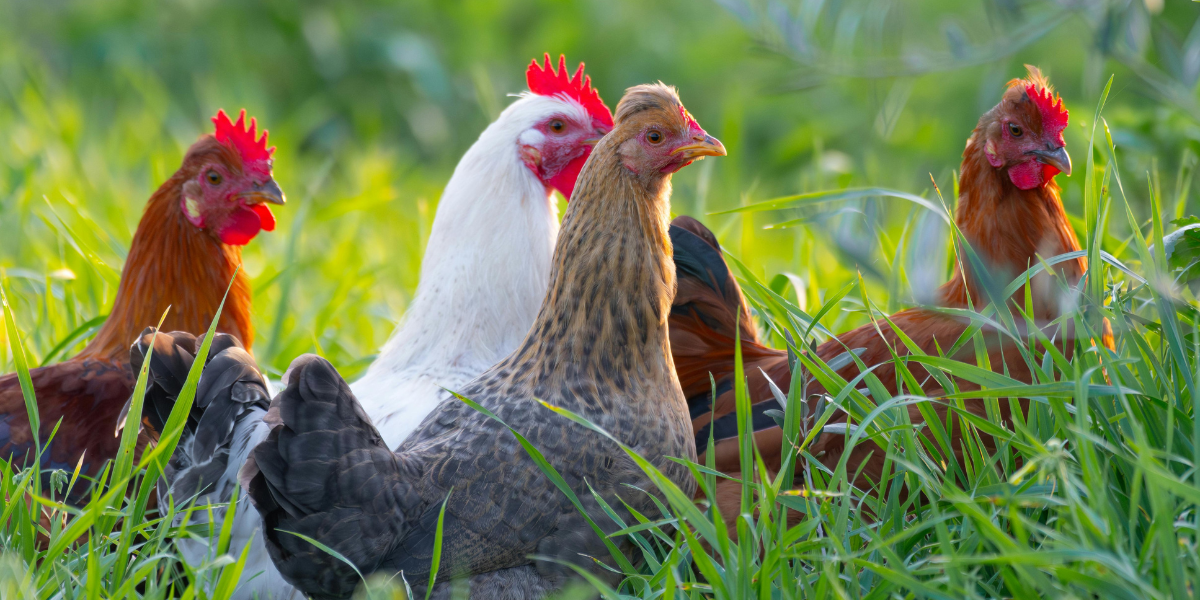
The activity of raising laying hens has evolved significantly year after year, and cage systems are losing space. Cage-free poultry production is the best alternative to the traditional model, especially when considering new market demands, which increasingly value concern for animal welfare.
Brazil has already reached the mark of 49 billion eggs produced, according to the Brazilian Animal Protein Association (ABPA). Most of this production still comes from cage confinement systems, and there are many questions about how to raise cage-free laying hens. However, the truth is that this production method, which prioritizes animal welfare, is simpler than most people imagine.
The cage-free laying hen system eliminates any type of cage confinement. In this model, birds are housed in barns with access to nests and perches, where they can move freely and express their natural behaviors.
Good practices for raising cage-free laying hens
Caring about animal welfare means going beyond simply eliminating cages. To raise cage-free laying hens, it is important to consider several factors, such as nutrition, management, and handling.
To begin with, poultry houses must have good ventilation and adequate lighting. To maintain ideal temperatures, especially in regions with excessive heat, facilities should be equipped with fans or exhaust systems.
From the fourth week of age onward, birds must have access to perches, with a minimum space allowance of 7.5 cm per bird. Beak trimming, when performed, must be done within the first 10 days of life.
In addition, laying hens must receive a balanced diet appropriate for their age, free from ingredients derived from mammals or birds and free from preventive antibiotics or growth promoters, including coccidiostats (vaccination is permitted).
Regarding feeding, it is essential to provide a sufficient number of feeders and drinkers to prevent competition among birds during meals.
For proper management of cage-free laying hen systems, everyone involved in daily handling must be trained and knowledgeable about good practices and appropriate animal handling methods, always avoiding stress and fear.
The presence of an adequate number of nests and perches is essential for birds to express their natural behaviors. At least one individual nest must be provided for every five birds, or 0.8 square meters of communal nesting area for every 100 birds. For laying hens, the facility must provide 15 cm of perch space per bird. Dust bathing is a highly valued natural behavior, so clean and dry litter on the barn floor is essential.
It is also important to monitor birds twice daily to check temperature, humidity, and air velocity conditions.
4 tips for raising cage-free laying hens
Many large companies such as McDonald’s, Burger King, and Giraffas have already announced that starting in 2025 they will use only eggs sourced from cage-free systems. This is the market trend. If you are a producer planning to transition to this model, or if you already operate this way and want to increase safety for your laying hens, consider the following tips:
-
Prioritize hygiene
Hygiene begins at the farm entrance: controlling vehicle and human access is essential.
Appropriate clothing must be provided for visitors and employees.
Facilities where animals are housed must be cleaned regularly.
-
Adjust the structure
A cage-free laying hen facility does not require major investments. Much of the structure can be built using low-cost materials such as straw and wood.
The floor should be covered with high-quality substrate to improve bird comfort. It is also important to avoid structures or equipment where birds could hide, become trapped, injured, or unable to escape.
-
Invest in biosecurity
Facilities must be built in areas isolated from access by other animals, including domestic animals.
If trees are used in outdoor areas, non-fruiting species should be selected and kept well-pruned to prevent use by wild birds.
-
Have an emergency plan
Every poultry farm must have an emergency plan for adverse situations, as well as equipment to respond to these scenarios, such as an owned or rented generator, ensuring that issues like power outages do not interrupt the daily supply of feed and water. In times of pandemic, such a plan becomes even more important.
To learn more about how to raise cage-free laying hens, also check out our free resource: Digital Guide for Laying Hens.
Published on February 11, 2026