

Did you know that you can promote animal welfare?
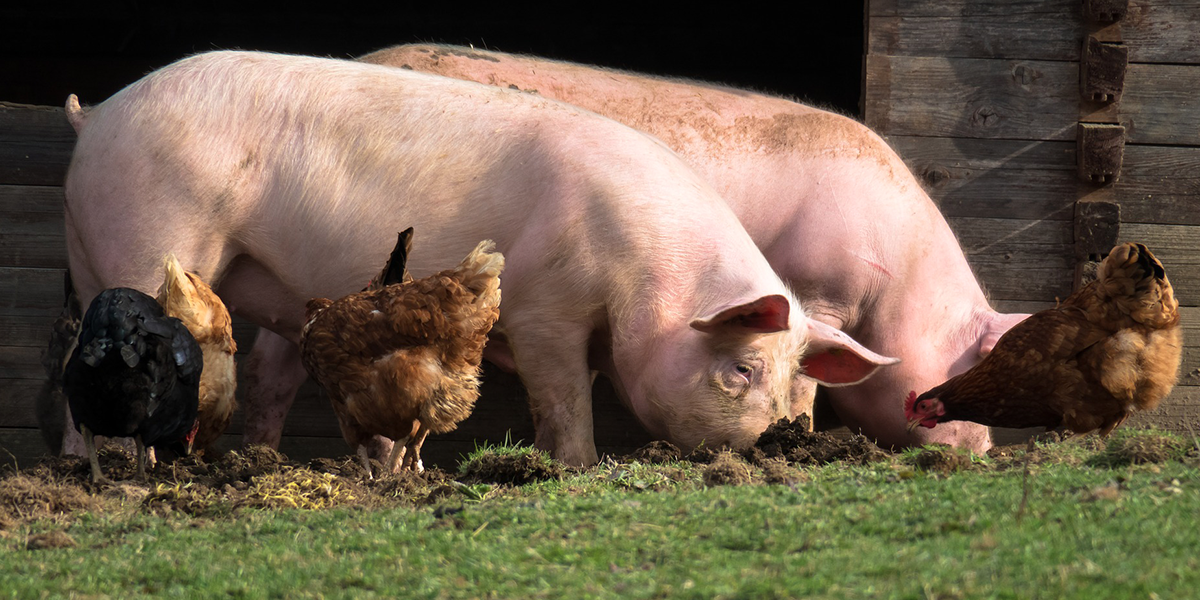
Beyond a moral or ideological issue, defending and promoting animal welfare is a necessity for public health and food safety. This is because various practices in farming systems that do not prioritize animal welfare can have serious repercussions for the lives of the population.
The use of antibiotics to enhance the growth of animals such as chickens is one example. This technique can result in resistant bacteria, make it difficult to treat diseases in animals and also harm those who consume this food.
Another serious problem when there is no care for animal welfare is zoonoses, diseases transmitted from animals to humans. Without good living conditions, it is easier for animals to develop diseases and after the Covid-19 pandemic this issue has gained prominence, not only among specialists and scholars on the subject, but also among the general public.
Faced with this reality and the need to improve farming systems to provide better living conditions for animals, did you know that consumers have a lot of power to promote animal welfare? The behavior of those who buy influences the processes and routines of those who produce. Find out how and why.
How can consumers promote animal welfare?
There are several possible ways for consumers to promote animal welfare. The first is to stop buying products from companies that don’t provide good conditions for their farms.
In the current economic scenario in Brazil and around the world, in which more and more companies face competition and need to differentiate their businesses, the word and actions of the consumer carry a lot of weight for companies to keep their products in line with the demands of those who buy them.
One of the ways to find out if the company has this kind of commitment is to see if the packaging contains an animal welfare certification seal. This seal is a confirmation that the animals are given the proper care to develop their natural behavior, without being subjected to food deprivation or unnecessary stress and fear.
Another way to promote animal welfare is to encourage the sale of certified products in the establishments where you eat. Talking to managers and owners of markets and butchers, for example, asking for this type of merchandise, is a great way to demonstrate consumers’ concern for promoting animal welfare.
A third way to promote animal welfare is to encourage friends, family and acquaintances to follow suit. When people understand the importance of the cause, they advocate the idea on social networks, in conversation circles, etc.
Why promote animal welfare?
Practices to promote animal welfare bring benefits to both producers and consumers. As we said at the beginning of the text, they are essential for health reasons, since well cared for animals are healthier and therefore less susceptible to developing diseases that can be transmitted to humans. Animals treated in good conditions also need fewer antibiotics, reducing the indirect intake of these drugs by people.
Another benefit of implementing actions to promote animal welfare in production is the improvement in the quality of the product that reaches the consumer’s table.
Food produced in compliance with animal welfare standards has better quality.
Conscious consumption is a movement that is growing day by day. In 2016, a study carried out by the NGO World Animal Protection on consumer perception of animal welfare showed that 91% of those interviewed understood that there is a relationship between animal welfare and the quality of meat.
More recently, a survey by the National Confederation of Industry (CNI) showed that four out of ten Brazilians said they had already boycotted a brand or company for testing or mistreating animals and 37% said they were willing to pay more for products that did not cause animal suffering.
The urgency for production to promote animal welfare is a path of no return, and consumers can play their part in this chain in an active and informed way. If you’re not yet part of this group, it’s worth considering the subject further to understand the advantages of buying certified products.
To find out more about this topic, check out the article: Everything you need to know about animal welfare certification.
Published on July 24, 2025