

Learn about poultry behavior and improve animal management and welfare
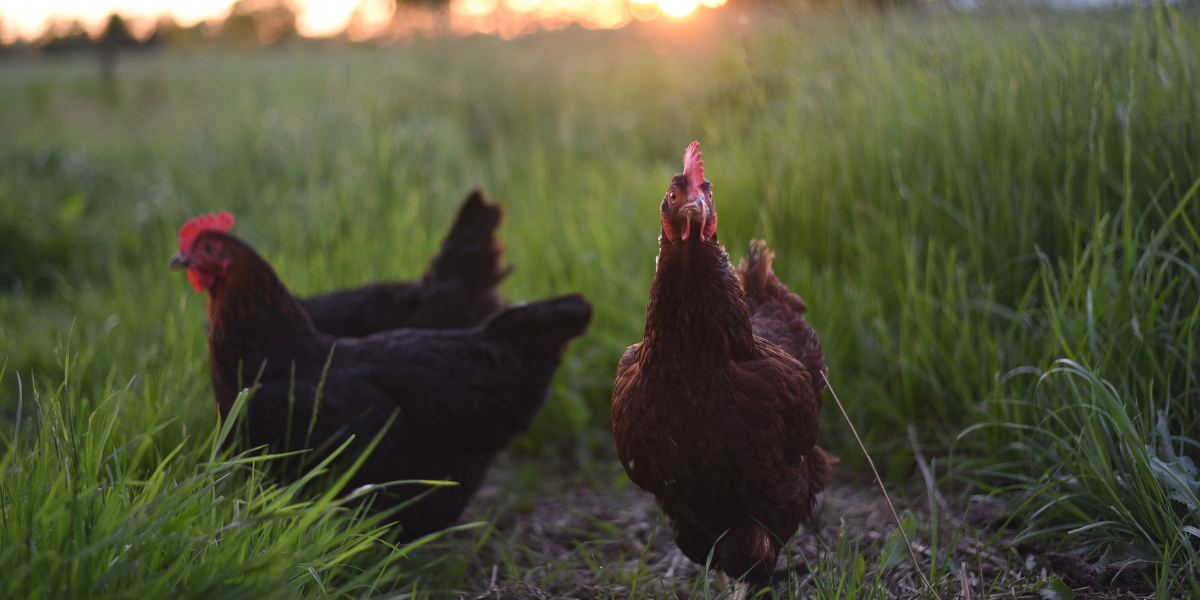
Providing welfare for poultry reduces costs and risks, improves the working environment, increases productivity, improves the quality of the end product and also meets the regulation of international markets. To do this, it is crucial to know the characteristics and behavior of the birds and how they relate to the environment.
Among other possible definitions, welfare is, in the words of Barry O. Hughes, “(…) a state of complete physical and mental health in which the animal is in harmony with its environment”. In order to give birds a life of wellbeing, it is necessary to use facilities, equipment and techniques, as well as staff training, that guarantee peaceful handling and low stress for animals and breeders.
Stay with us and learn more about how knowing bird behavior can improve animal management and welfare!
Poultry behavior
Understanding poultry behavior means being able to recognize signs of stress, illness and pain in animals, as well as identifying abnormal behaviors early on, in order to effectively manage these situations and create a balance between ethical production and economic profitability. The way they walk, eat, look, group together, fight or flee contributes to their survival – and their way of acting is determined by two types of behavior:
Innate behavior → Reactions pre-programmed even before the chicken’s birth that don’t depend on experience and are typical of the species, i.e. “birds are born knowing/doing them”.
Learned behavior → Depends on the individual experiences of each bird, in other words, their behavior is shaped according to the positive or negative experiences they have.
Omnivorous, farmed poultry eat anything from seeds to small invertebrates when given the opportunity and spend more than 90% of their time scratching and searching for food, even in places where feed is available. The bird’s sensory repertoire is stimulated by what it hears, smells and sees so that it reacts according to each situation.
Chickens live in small groups of 5 to 30 individuals whose order is dictated by the dominance of some individuals and the submission of others. This social dynamic remains even when they are kept loose in sheds or aviaries. Body posture is an important sign of dominance, as are weight, size, age and genetics.
Escape zone
The escape zone is a circular area around the bird that it has defined for itself according to its tolerance to the presence of strangers and threats before initiating an escape. The chicken tends to flee when this area is invaded, but in situations where there is no room to escape, they may stall or fight.
When raised in large groups of other birds, the invasion of their individual space leads to increased stress and aggression.
Sensory characteristics
Poultry evaluate new stimuli through sight and hearing before reacting: if the reaction is fear, they can panic and jeopardize their own well-being, suffer bodily harm and result in economic losses. Fear generates reactions of fight, flight or fright (paralysis) and, when it realizes that there is no danger, it loses interest.
The bird may stop consuming food if it is afraid or feels threatened.
Vision
With their eyes located on the sides of their heads like all prey species, poultry have binocular vision (when they can see a narrow strip in front of them with both eyes), monocular vision (wide and panoramic to the sides) and a blind area (behind the body, making it easier for them to be caught from behind). They are animals that see colors but don’t perceive depth well, especially right in front of their head.
Hearing and communication
Hearing and vocalization are essential for birds: with a wide repertoire of vocalizations, birds provide information for others to hear and react quickly – in the case of the presence of predators, for example.
Birds’ vocalizations change depending on the type of challenge they perceive. In the case of terrestrial predators, birds stand still, upright and emit rapid, low-pitched vocalizations. When they are aerial predators, they increase the intensity of their vocalizations while ducking and running for cover.
Learned behavior
Compared to pigs, cattle and sheep, chickens have a lower capacity for learning – their learning is generally focused on satisfying basic needs such as moving around the environment where they are being housed, choosing the best food, avoiding danger and recognizing people, as well as reacting according to environmental stimuli (light, temperature, the presence of other birds, for example).
Even so, the previous experiences the chickens have had during handling will affect their future reactions to fear and stress. When they are raised in open environments, with a lower population density, and handled by people who move between them calmly and without sudden movements and loud noises, the birds are more docile, less reactive and fearful and can be stimulated to adapt to new situations more easily.
→ Download the educational material How to Become a Certified Humane® Egg Operation
Published on July 5, 2025